Posted by: SherlockHomesSY | 26 Oct 2010

Solution Basics: Rain and Groundwater Drainage

Wall DrainageDRAINAGE

Keep water out of the house.
Let water out that gets in.
Water will get in, so let it out
– Drain the yard
– Drain the foundation
– Drain the building
– Drain the assembly
– Drain the opening
– Drain the component
– Drain the material

What does drainage have to do with improving energy performance?  First, why fix a house that is tearing itself apart?  Otherwise, water becomes vapor—and that has to be managed.  It’s best to avoid water in places it doesn’t belong. Read More…

Posted by: SherlockHomesSY | 22 Oct 2010

Solution Basics: Vapor Management

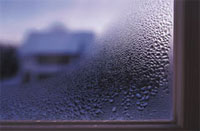
Window CondensationVAPOR MANAGEMENT

Keep water out.
Let water out that gets in.
Water will get in, so let it out.

Water comes in three forms: ice, liquid, and vapor.   This one is about vapor and how to manage it.

We don’t think about vapor much—until we have mold, indoor air quality issues, or find building deterioration in weird places.

Where does vapor come from? There are indoor and outdoor sources.  Then there is condensation and building drying.

Indoor Sources of Water Vapor

Read More…

Posted by: SherlockHomesSY | 19 Oct 2010

Solution Basics: Heating and Cooling Equipment Sizing

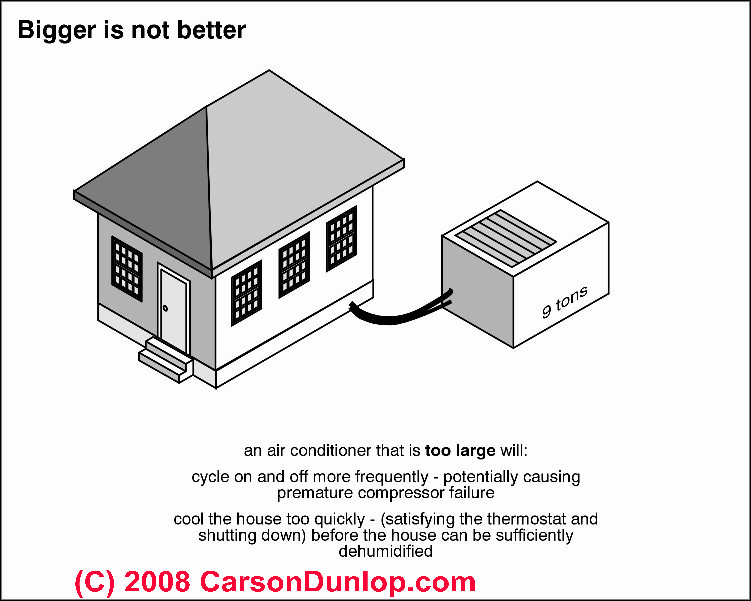
Oversized Air ConditionerEQUIPMENT SIZING

Many central heating & cooling systems are the wrong size.  Either the equipment is to big or the ductwork is too small.  Often, it’s both.  Add leaky ductwork and improper refrigerant levels. It’s no wonder why they don’t perform as advertised.

Sizing Equipment

The good news is that after air sealing and insulation is complete, smaller heating and cooling equipment can be used.  The approved way for figuring out what size it should be is by energy modeling, by hand or with a computer.  Many models use ACCA Manual J, Residential Load Calculation as their base.

Plenum Sizing

Read More…

Posted by: SherlockHomesSY | 15 Oct 2010

Solutions Basics: Ventilation

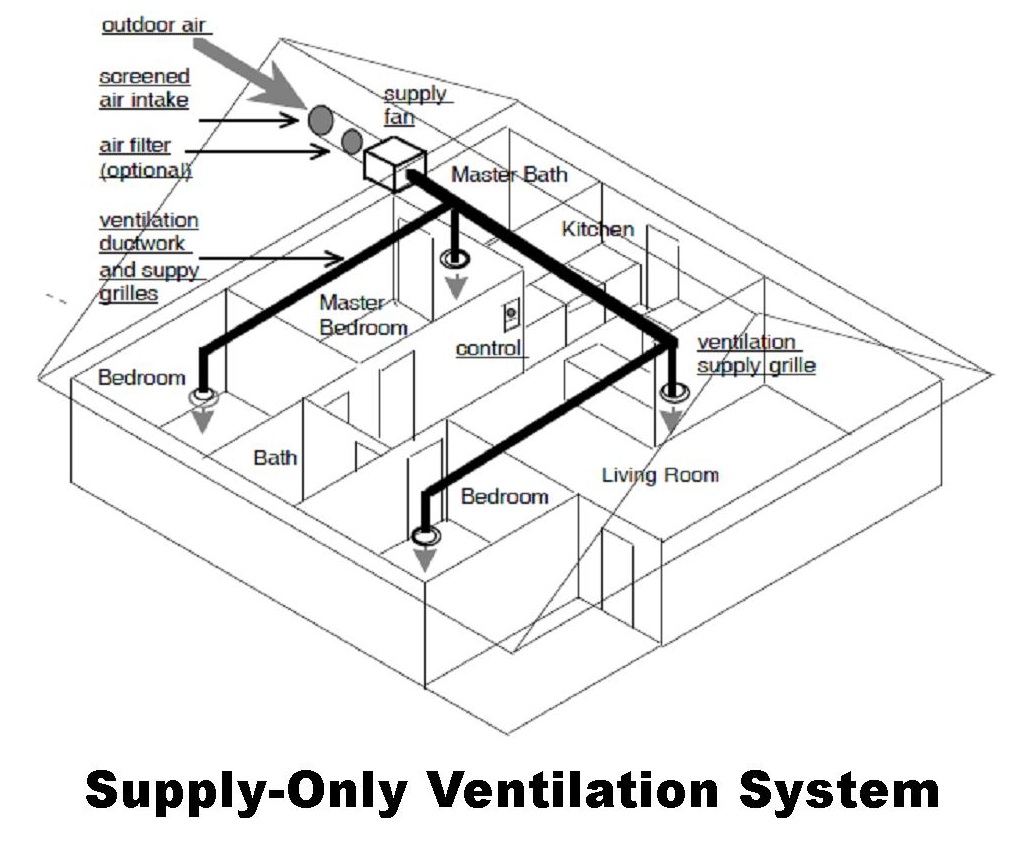
VENTILATION

Functions of ventilation systems:
– Bring in outside air
– Distribute outside air
– Exhaust strong pollutant point sources
– Filter the air
– Do it without noise, vibration, drafts, and odors

We encourage people to seal up their house tighter than a submarine and provide mechanical ventilation.  What does this mean exactly?  I’ll start with what it isn’t and then talk about what it is.

Infiltration & Exfiltration

Read More…

Posted by: SherlockHomesSY | 12 Oct 2010

Solution Basics: Insulation

INSULATIONPlaces to Insulate

Installed right, insulation will slow, not stop, heat transfer across the shell (walls, ceilings, and floors).  The keys are as follows:
. Provide at least what’s required by your building
– Ensure it’s against an air barrier
– Don’t let air flow through it
– Leave no gaps

Provide Required Insulation

Installers really ought to provide more than is required.  Remember, the building code is a minimum standard.  Believe it or not, the way better insulated floors are installed, the effective insulation value is R-5 though it says R-19 on the batt.  In a perfect world, the best that could be done is a little less than R-16. Perhaps it’s better use the Department of Energy’s (DOE’s) recommendations than it is the building codes. Read More…

Posted by: SherlockHomesSY | 8 Oct 2010

Solution Basics: Duct Sealing

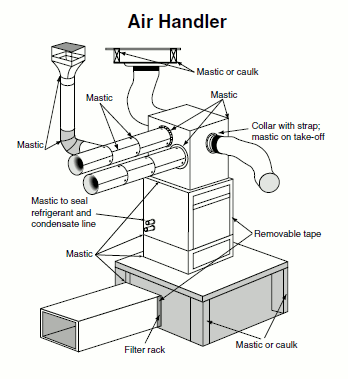
DUCT SEALINGDuct Sealing Joints

Duct sealing is a special case of air sealing.  The difference is that the holes are not created equal—especially when the fan is running.

People say, from an energy perspective, that holes in ductwork doesn’t matter when the ductwork is inside the shell because the air just leaks into the house.

Don’t kid yourself.  Holes in ductwork do matter because a fan is forcefully moving the air.  The energy loss may be near zero, but the hole can wreck havoc on the pressure differences in the house, leading to static electricity, moisture intrusion, backdrafting furnaces and water heaters, as well as other crazy behavior.

Nope.  Holes in ductwork are not created equal.

When ductwork runs through the attic, crawlspace, or garage the holes behave like any other hole in the house—until the fan runs.  When it does, then you unwittingly have a polluted air delivery system.  You still get static electricity, moisture intrusion, backdrafting—only much worse.  Add pollen, dust, soil gas, vehicle exhaust, fertilizer, pesticides, herbicides, and the like to get quite a potentially toxic stew! Read More…

Posted by: SherlockHomesSY | 5 Oct 2010

Solution Basics: Air Sealing

AIR SEALINGAir Sealing a House

What could be easier? Air moves when there is a pressure difference, just like weather highs & lows. For a house, air moves when there is a pressure difference on opposite sides of a hole.

Air Flow =
Hole + Driving Force

The driving force (pressure) is caused by hot air rising (stack effect), wind, holes in ductwork, or fans. Air pressure principles are discussed in detail on my home performance website.

Read More…

« Newer Posts - Older Posts »

Categories